How do social movements reshape economic policies and influence corporate decision-making? In what ways do social movements act as economic shocks rather than purely political events? Should governments and corporations adapt their strategies in response to social movements, or resist short-term pressure?
This blog examines how social movements increasingly function as powerful forces within economic systems, disrupting markets, influencing fiscal policy, and reshaping regulatory priorities. It explores how large-scale civic mobilization creates volatility, operational disruption, and policy urgency, forcing governments to respond with rapid spending, legislative reform, and long-term structural adjustments that can redefine national economic strategies.
The article also analyzes how social movements affect corporate strategy, from real-time operational decisions to long-term risk planning and brand positioning. By framing social movements as structural economic inputs rather than external noise, the piece argues that forward-looking governments and businesses must integrate social dynamics into forecasting and strategy to build resilience, maintain legitimacy, and navigate an increasingly complex global economy.
I’d like you to ponder a question. There is no doubt that the political currents of any era—including our own age of accelerating globalization—are shaped by, and responsive to, the social movements of the day.
But to what extent is the same true of economic policy and corporate strategy?
Are corporations and the economic policies of governments influenced by social movements? If so, to what extent? And if they are, should they be? Or should corporate strategy and economic policy aim to be more timeless and enduring, not buffeted by the winds of potentially fleeting social movements?
That’s the focus of this piece. And in an era characterized by increased levels of political polarization and populism, it is an important area for each of us to have a better understanding of.
Social Movements as Structural Economic Shocks
When social movements gather force, they disrupt the economic equilibrium that modern systems rely on. Many of us feel that the recent pace of social change has been particularly rapid, and the topic is gaining increased academic attention in an attempt to understand whether this perception is valid and, if so, what the underlying drivers might be.
It’s crucial work because markets depend on a degree of predictability: stable labor markets, steady consumption, uninterrupted supply chains, and the confidence that political conditions will allow businesses to plan years into the future. Collective unrest destabilizes these conditions. It creates uncertainty that is difficult to model and impossible to ignore.
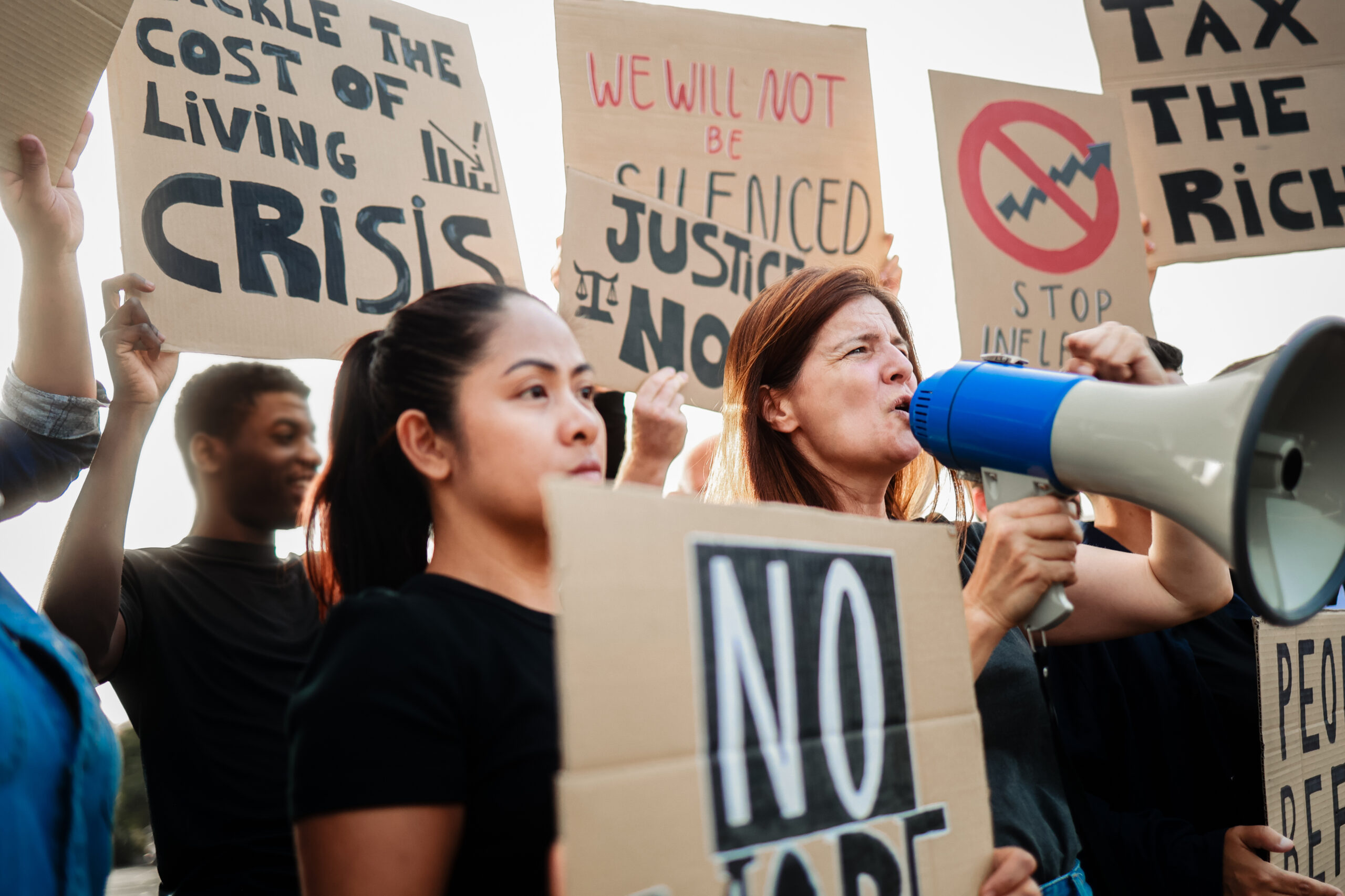
One of the first economic consequences of large-scale social movements is heightened volatility. Investors react swiftly to signs of political or social instability, adjusting portfolios in anticipation of regulatory change, rising compliance costs, or weaker consumer sentiment. These shifts can trigger rapid corrections in equities, bonds, or currency markets, as seen in numerous episodes ranging from the Arab Spring to widespread inequality-driven protests in Europe and North America. At the same time, investment confidence often declines, particularly among foreign investors who must weigh the risks of entering a market where policy direction appears unpredictable or where protests threaten operational continuity through disruptions to physical assets, such as ports, or to the ability of employees in certain nations to work productively and safely.
Operational disruptions follow close behind. Large demonstrations, strikes, and civil-society mobilizations interrupt production schedules, delay logistics networks, and reduce labor productivity. Even digital-first businesses encounter disruptions when social movements reshape consumer expectations, alter brand reputations, or directly target platforms as vehicles for activism. These operational strains introduce new costs that firms cannot easily avoid or transfer.
Governments typically respond to such moments with urgency, prioritizing the restoration of calm over long-term fiscal prudence. Emergency spending packages, subsidies, relief schemes, and rapid legislative adjustments become the primary tools for stabilization. While these actions may successfully ease tensions in the short term, they often contribute to ballooning deficits or distorted budget allocations. In this way, social movements function as unplanned economic shocks—forcing institutions into immediate responses that may not align with their preferred long-term strategies.
Influence on National Economic Policies
There are three key areas in which social movements affect economic and corporate policy. They are pressure on fiscal decision-making, shifts in regulatory and legislative agendas, and long-term structural adjustments. Let’s examine each in turn.
Social movements exert substantial pressure on national fiscal policy, particularly when they expose economic or social grievances that governments can no longer postpone addressing. In many cases, governments turn quickly to fiscal tools such as direct cash transfers, increased subsidies, temporary tax relief, or compensation programs to ease the immediate sources of tension. These measures aim to demonstrate responsiveness and prevent protests from escalating, yet they often come at a significant cost. Funds originally earmarked for infrastructure, defense, or technological investment may be redirected to crisis management. Over time, repeated waves of emergency spending can deepen structural deficits and undermine the credibility of long-term fiscal planning.
Beyond fiscal measures, social movements often reshape the regulatory and legislative priorities of national governments. Public pressure accelerates reforms that would otherwise be mired in lengthy consultations or political negotiations. Movements centered on inequality, labor rights, environmental justice, policing, or democratic representation have prompted governments to revise laws at unprecedented speed. Wage protections, gig-economy regulations, environmental disclosure standards, and corporate accountability frameworks have all been introduced or strengthened in direct response to sustained civic mobilization. This acceleration reflects the political reality that in periods of intense scrutiny, delay becomes riskier than action.
When social movements persist over years rather than months, they begin to influence the deeper architecture of economic policy. Governments reevaluate their taxation systems, welfare structures, labor protections, and public investment strategies to address the structural issues that movements bring to the surface. The history of major fiscal reforms, ranging from progressive taxation to expanded social insurance systems, demonstrates how prolonged civic pressure can shift macroeconomic planning toward a greater emphasis on equity and resilience.
However, the converse is equally true. When governments fail to address the root causes of unrest, such as inequality, stagnant wages, or exclusionary governance, then instability becomes cyclical. New movements arise, confidence erodes, and the economic cost compounds with each recurrence. Social movements, therefore, operate as both a warning signal and a mechanism for forcing structural adaptation, especially in societies where policy inertia has allowed disparities to deepen unchecked.
Influence on Corporate Strategy and Operations
For corporations, social movements have evolved into significant strategic variables that can require decisions to be made about whether to preserve with a previous plan, or change course in the face of seemingly important information that requires a strategic adjustment.
During periods of unrest, companies are compelled to adapt in real-time, adjusting their supply chains, revising security protocols, and safeguarding the continuity of their workforce. These adaptations introduce immediate operational costs, from rerouting logistics networks to increasing insurance premiums and enhancing physical or digital security. Even companies far removed from the physical epicenter of unrest face heightened uncertainty as shifting social expectations alter consumption patterns and investor priorities.
The rise of social movements has also forced firms to reevaluate their market positioning. Brand messaging that once appeared neutral may suddenly seem tone-deaf or misaligned with prevailing public sentiment. Consumers respond differently during moments of social friction, scrutinizing corporate statements, leadership behavior, and underlying business practices. Silence can become financially costly if interpreted as indifference. Conversely, reactive declarations that lack credible action can expose firms to accusations of performative engagement. In this environment, companies face pressure to articulate their values clearly and to demonstrate that these values are reflected in their operations.
Over the longer term, social movements often accelerate structural changes within corporate strategy. Issues that were once considered peripheral become central pillars of strategic planning. Firms increasingly recognize that social stability is an economic input, not an external variable. Supply chains built on fragile labor practices, or markets dependent on inequitable local conditions, are now viewed as liabilities. As a result, corporate strategy has begun to incorporate social risk in much the same way it has traditionally integrated currency risk or commodity volatility. The influence of social movements has made it clear that long-term competitiveness depends as much on social legitimacy as on operational efficiency.
Economic Consequences of Ignoring Underlying Inequality
The economic implications of failing to address inequality are both cumulative and destabilizing. In-depth research conducted by the UN’s Department of Economic and Social Affairs has shown that when income disparities widen and opportunity gaps persist, societies become more susceptible to repeated cycles of unrest. These cycles generate fiscal strain as governments are forced into recurring emergency interventions. Such responses may succeed in quieting immediate tensions, but often come at the cost of long-term economic coherence, undermining budget discipline and diverting resources from productive investments that take longer to bear fruit but are effective in addressing systemic causes rather than surface-level symptoms.
For corporations, the consequences are no less significant. Market volatility increases when consumer confidence falters, and investors begin to price in social instability as a structural risk rather than a temporary disturbance. Sudden policy swings create an unpredictable business environment that complicates capital allocation and multi-year planning. Firms operating across large workforces face the added complexity of managing morale, retention, and productivity in an environment where social grievances manifest both inside and outside the workplace. Over time, the productivity loss from repeated disruptions becomes measurable, eroding national competitiveness and diminishing the very conditions that attract investment and foster innovation.
The compounding nature of these shocks is particularly damaging. Unlike traditional economic downturns, which follow familiar patterns and can be modelled with reasonable accuracy, cyclical social unrest creates a form of ambient uncertainty. It undermines the institutional trust necessary for stable markets, reduces the credibility of long-term policy commitments, and weakens the social contract that underpins economic exchange. The lesson is clear: addressing inequality is not simply a moral imperative but a strategic economic necessity. Failure to act ensures that the cost of instability will rise with each cycle.
The Need for Forward-Looking Analysis
As social movements continue to influence economic outcomes, both governments and corporations must integrate social dynamics into their forecasting models with far greater sophistication. Traditional economic analysis, which has focused on employment figures, inflation rates, and GDP growth, has proven insufficient for predicting the impact of rapid, decentralized civic mobilization. The rise of digital organizing, the spread of real-time information, and globalized activism have made social sentiment more volatile and influential than in previous decades. Institutions now face the challenge of tracking not only economic indicators but also patterns of public emotion, collective grievance, and the velocity of online discourse.
Emerging tools and frameworks have begun to fill this gap. Social-risk analytics, sentiment-monitoring platforms, geospatial modeling, and scenario-based stress testing enable policymakers and businesses to identify potential flashpoints before they erupt. These models, although imperfect, provide early warning systems that help organizations anticipate disruptions and adapt their strategies accordingly. The most forward-thinking institutions are combining traditional economic forecasting with qualitative assessments of social cohesion, demographic trends, and community-level tensions. Such hybrid models offer a more realistic picture of where risks lie and how they may evolve.
Ultimately, long-term economic resilience requires recognizing social movements as crucial inputs into the stability and performance of economies. When institutions understand that economic health depends on the social environment in which markets operate, they can craft strategies that are both adaptive and preventative. By integrating social dynamics into their decision-making processes, governments and corporations alike can navigate uncertainty with greater confidence and build systems capable of withstanding the pressures of a rapidly changing world.
Key Takeaways
The nature of our societies as complex, adaptive, and unpredictable systems, populated by millions of individuals, means that myriad social movements will continue to spawn, evolve, and flourish in perpetuity.
Social movements are often described as political expressions, moments of public disagreement, or calls for reform. Yet their influence stretches far beyond electoral debates or ideological divides.
They function as catalysts of helpful societal friction, unsettling long-standing assumptions about how communities, markets, and institutions hold together. When large groups begin to challenge the distribution of power or resources, the implications extend into the economic realm, affecting everything from budget priorities to corporate risk assessments and management.
For governments and corporations alike, the message is unavoidable. Social movements not only articulate grievances but also alter incentives, often compelling institutions to change course long before formal policies are rewritten.
This is a good thing.
Progress in our world requires new ideas to surface and be refined, and old ones to evolve in a way that makes them fit for purpose in a rapidly changing world.